

History
Liepāja Beach has been a popular swimming spot since the 1860s, when the city grew into a fashionable resort among European and Russian aristocrats, including the Russian Tsar's family and court. The beach has kept its appeal ever since and remains one of the main reasons to visit Liepāja today.
Architecture and surroundings
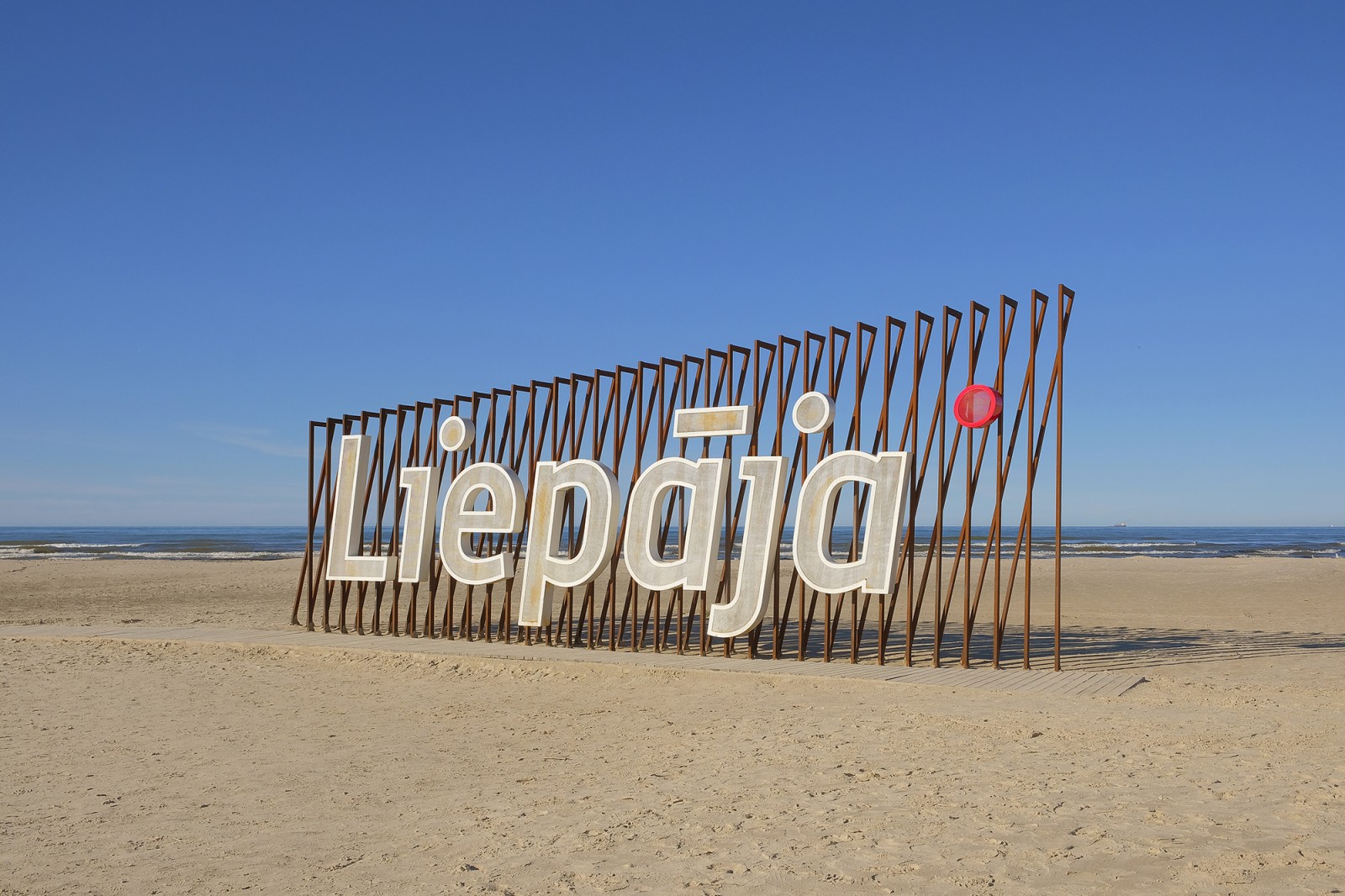
The beach borders Jūrmala Park, one of the largest dendrological parks in Latvia. In recent years the city has gradually rebuilt several beach access points, adding wooden boardwalks and improved entrances. Next to the central swimming area stands a lifeguard station, from which a wide boardwalk leads to the water for people with mobility impairments. The shore also features an art installation by artist Ēriks Božis, "Vēja paviljons" (Wind Pavilion).
Present-day use
The city beach runs about 8 km along the coast and is 50–80 metres wide in calm weather, with unusually fine, white sand. It has flown the Blue Flag every summer since 2001, an international certification of water and environmental quality. It is the first beach in Latvia adapted for people with visual and mobility impairments, equipped with audio buoys for the blind and a beach wheelchair. The beach is also popular for windsurfing and kitesurfing, and dogs are permitted on a leash outside the designated swimming zones.
Interesting facts
- After strong storms, amber sometimes washes ashore — but it must be distinguished from lumps of white phosphorus, a leftover from Soviet military use, which can ignite as it dries.
- Liepāja is often called "the city where the wind is born," and the frequent strong winds make the beach a favourite among windsurfers and kitesurfers.
- North of the city, beyond the Karosta Canal, lies the separate Karosta beach, which has repeatedly been rated among the most polluted in Latvia in recent years.