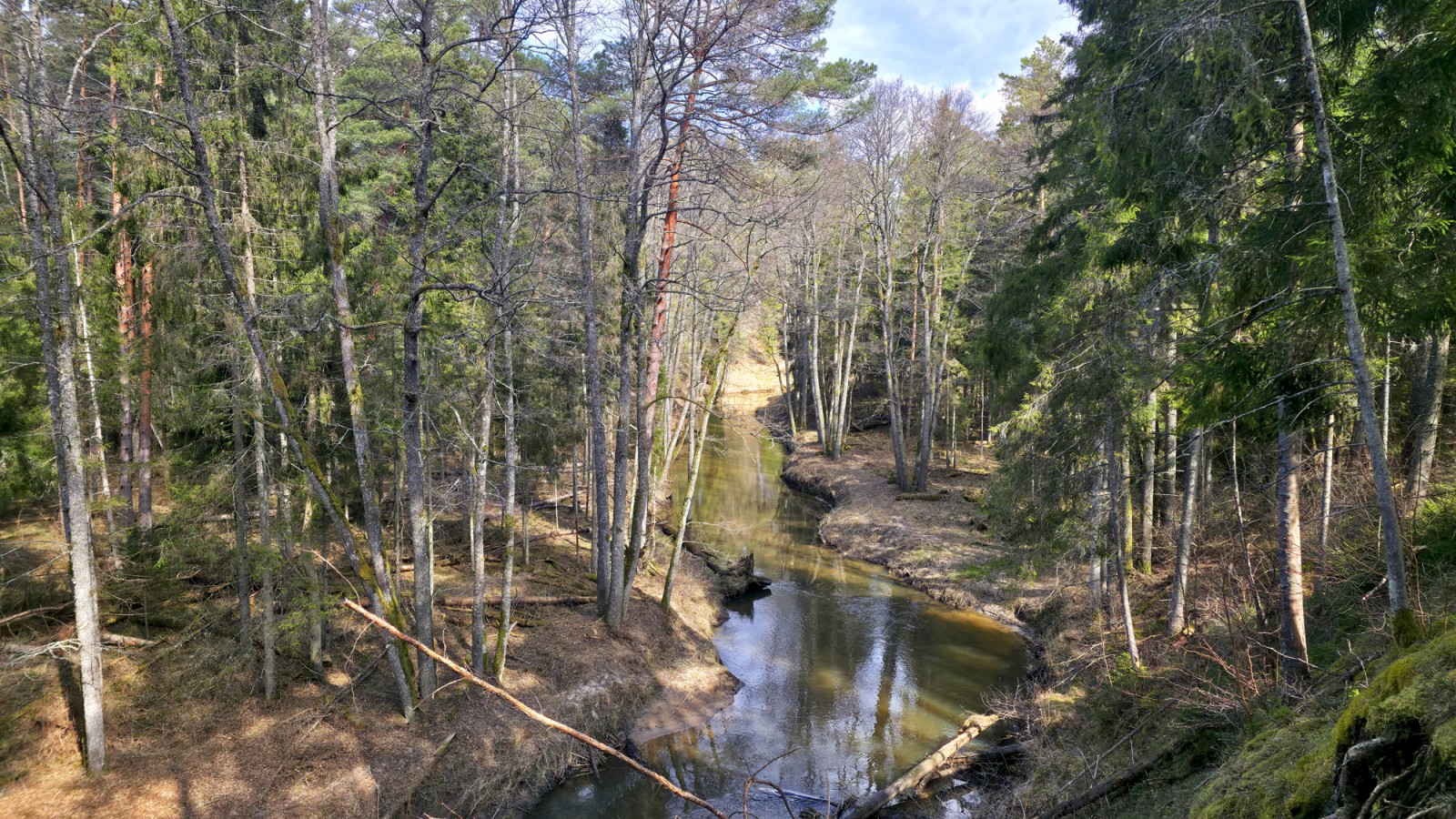
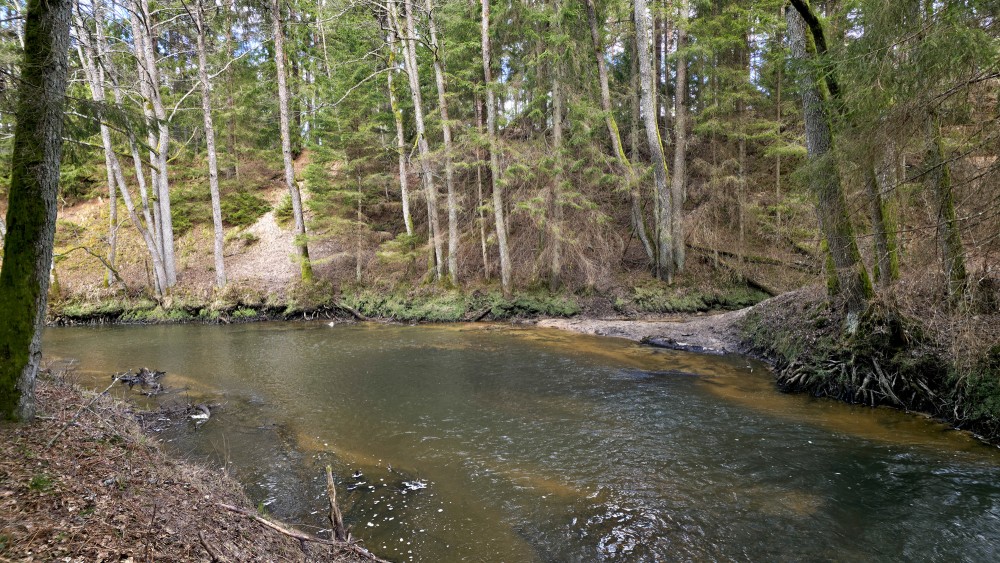
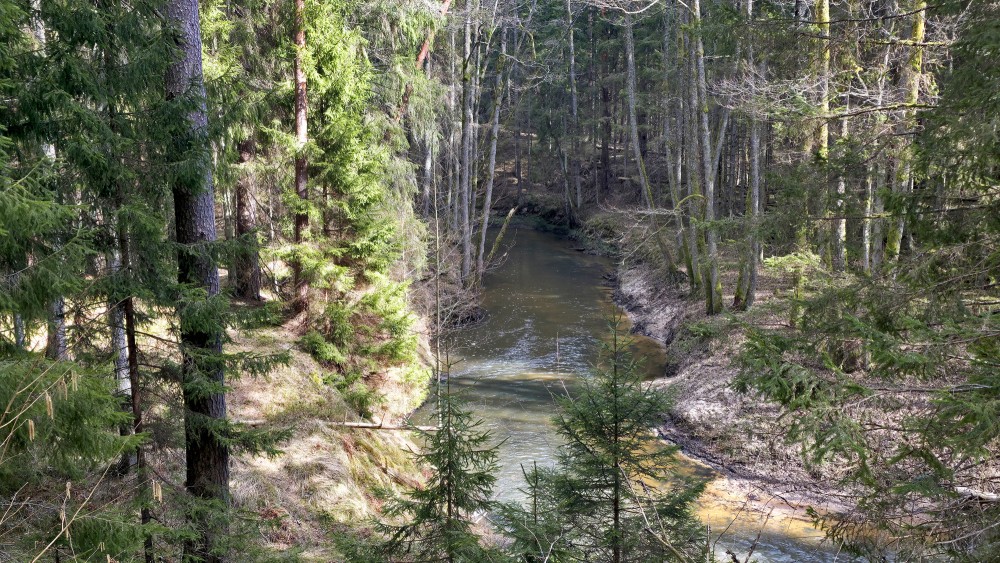
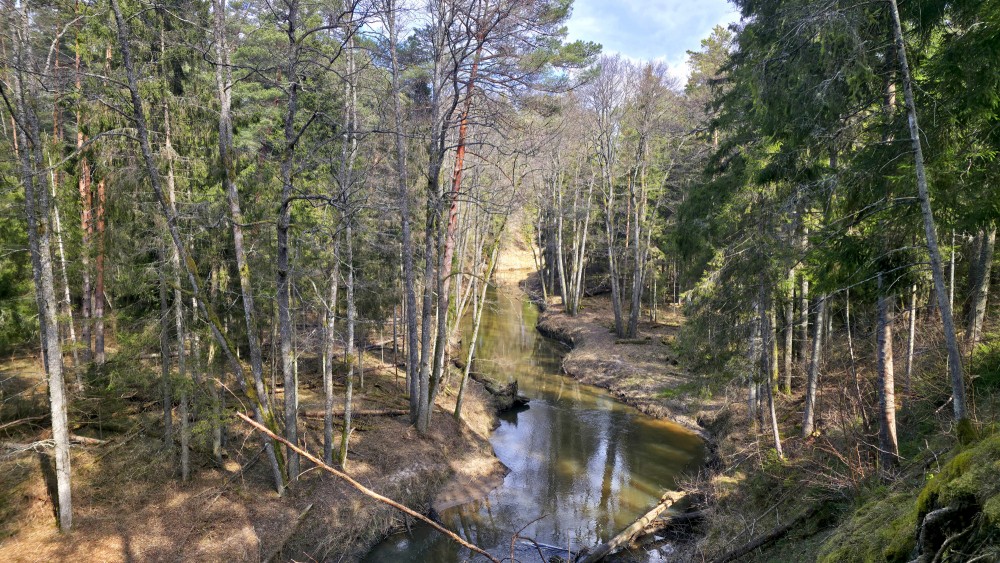
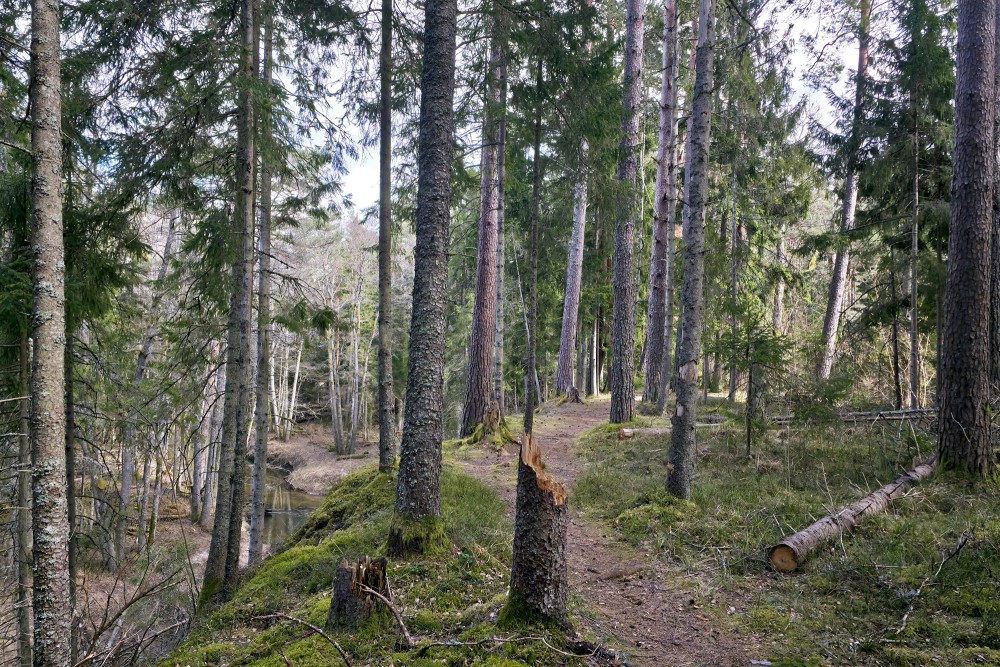
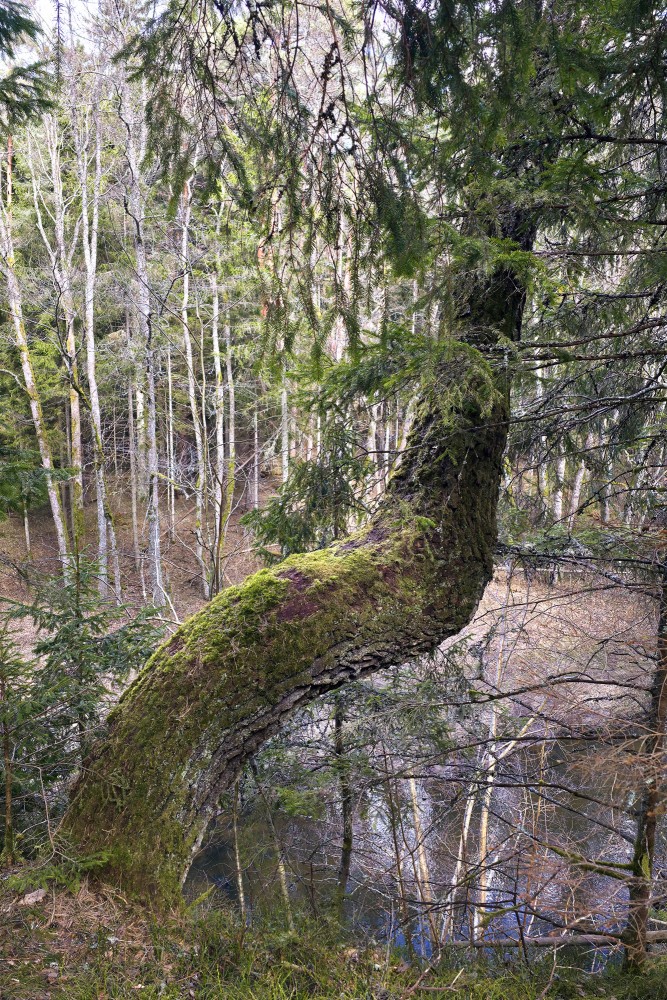
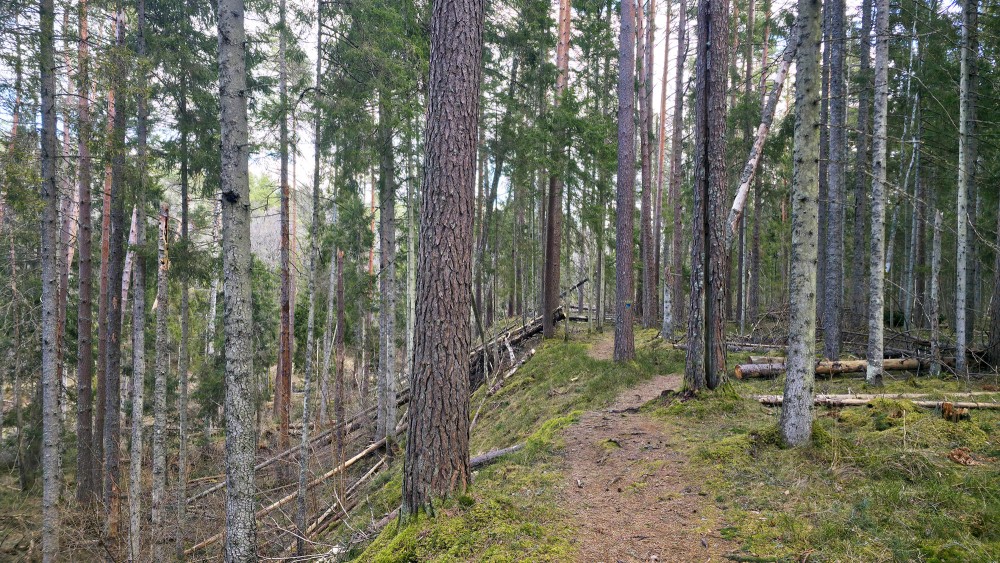
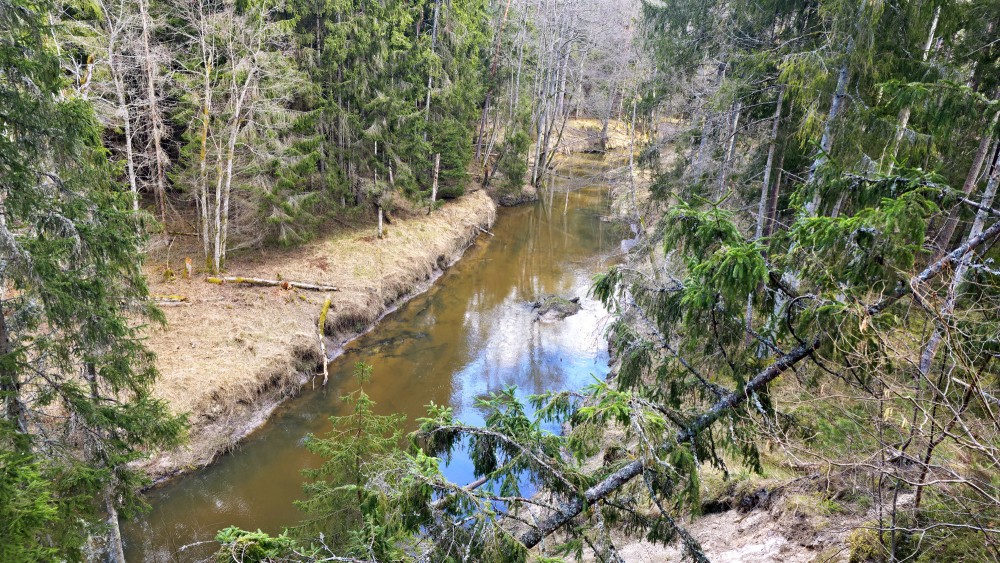
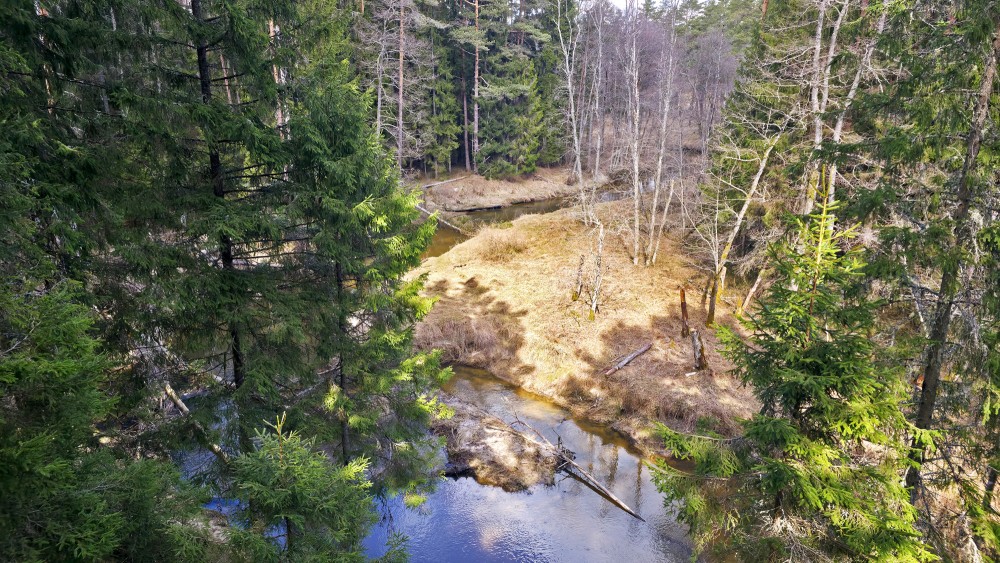
The "Rīvas loki" nature trail is located in the South Kurzeme municipality, Labrags (Jūrkalne parish). It stretches along the picturesque ancient valley of the lower reaches of the Rīva River, offering dynamic terrain and pristine natural landscapes.
History and Geographical Context
Historically, the Rīva River has served as a natural border between territories—during the Curonian era, its lower reaches separated the ancient lands of Piemare and Bandava. The nature trail itself is a modern tourism infrastructure project created to reveal the unique geomorphology of the river valley and provide sustainable public access to protected habitats.
Infrastructure and Environmental Features
Rather than a developed urban promenade, the trail is an active tourism route designed with minimal environmental intervention:
-
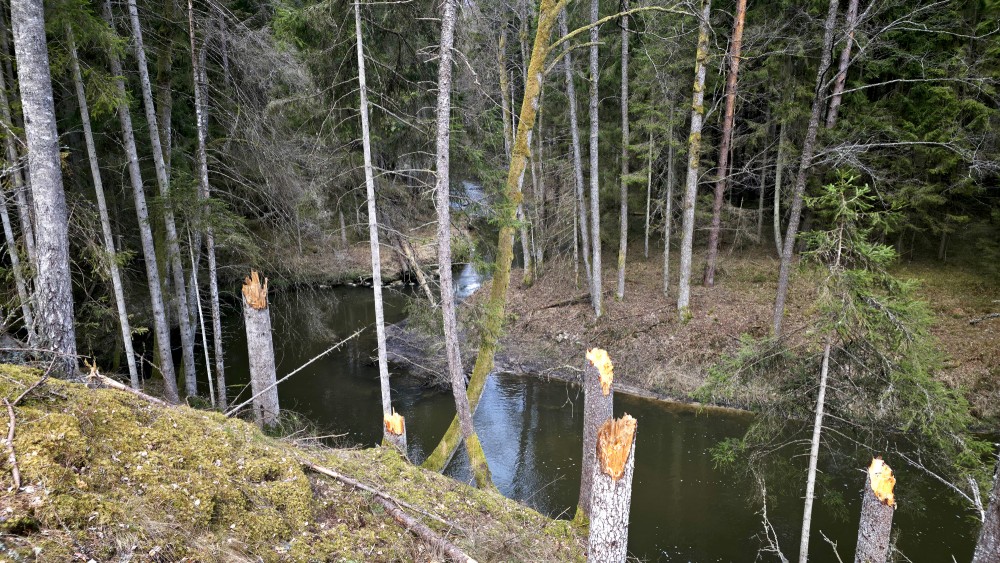
Structure and Terrain: The trail is a point-to-point (linear) route, totaling 8 kilometers in length (one way), divided into three stages with increasing levels of difficulty. It winds through the canyon-like ravine of the Rīva River, where the steep banks reach depths of up to 12 meters.
-
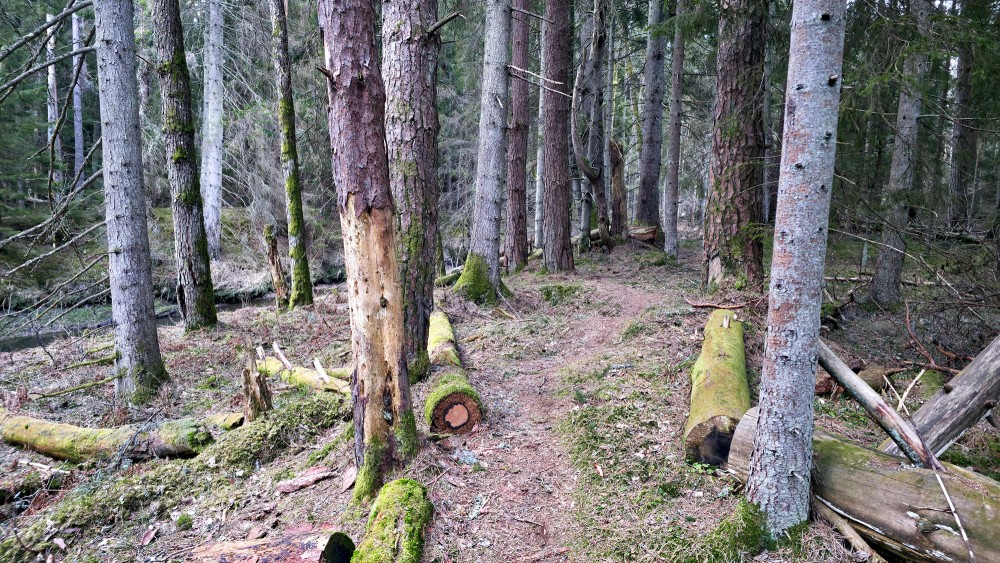
Surface and Amenities: The path consists mostly of natural forest dirt trails and unpaved paths. The route features wooden footbridges, steps to overcome steep inclines, a viewing platform, and several designated rest areas equipped with benches and campfire sites.
-
Accessibility: Approximately 1 km from the starting point, dedicated access gates and a viewing platform have been installed, making a section of the trail accessible to people with reduced mobility (with an assistant).
Contemporary Function
Today, "Rīvas loki" functions as a nature education, active recreation, and hiking trail. In addition, the river serves as a water tourism (canoeing and kayaking) route, which is best suited for the spring and autumn seasons due to fluctuating water levels.
Interesting Facts
-
Start and Finish: The official starting point of the trail is located right by the historic Ulmale-Labrags Lutheran Church, while the route concludes at the Gumbu Bridge.
-
The Wilderness Section: The final 2-kilometer section of the trail is unmarked and kept in a completely wild state with natural obstacles (fallen trees and overgrown banks), providing a more challenging experience for advanced hikers.
-
Rare Fauna: Due to the clean water and undisturbed environment, observant hikers can spot rare and protected bird species in the valley, such as the common kingfisher or the black stork.